Cabin Moss Stitch Double-Thick Teal Pot Holder Free Crochet Pattern

Introduction
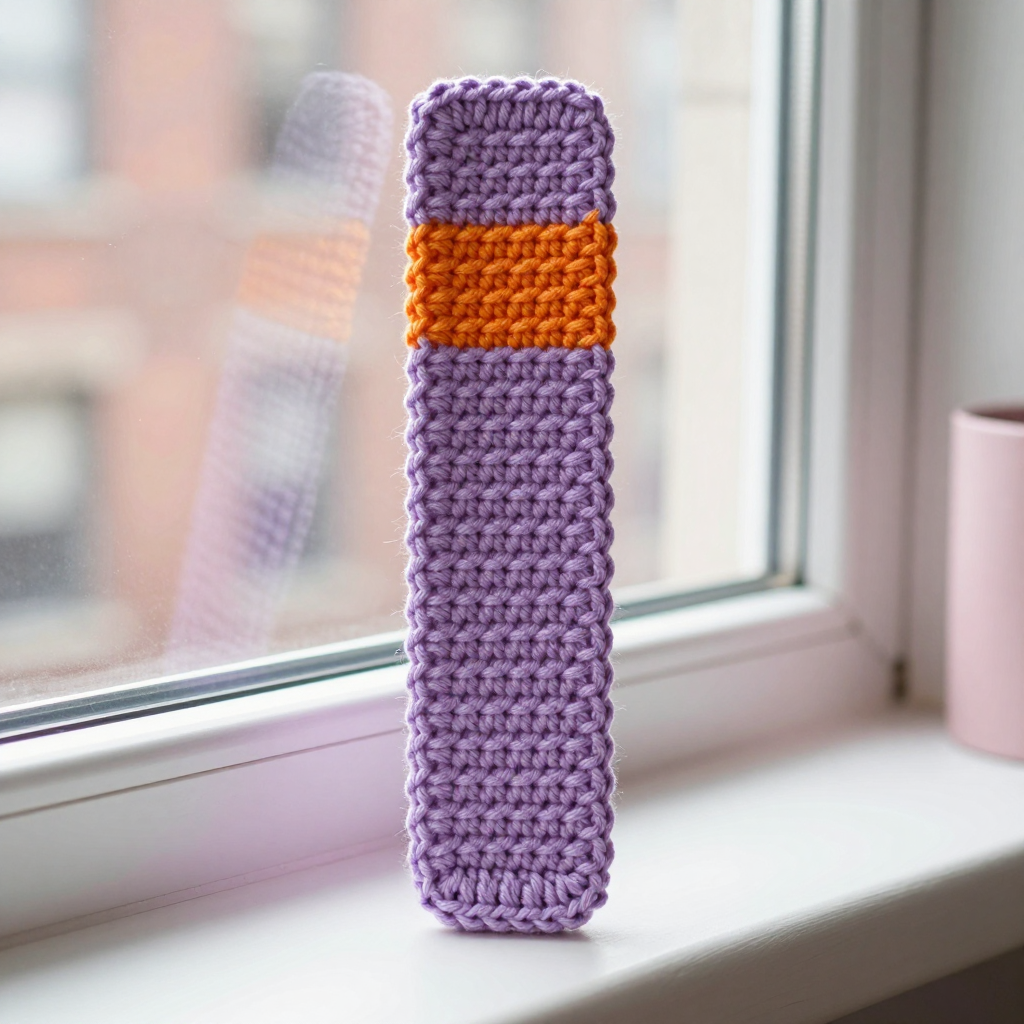
This cozy little pot holder is the perfect weekend project for anyone who wants a thick, sturdy kitchen pad without a complicated pattern. Worked in moss stitch in soft, plush chenille yarn, it comes out dense, nubby, and wonderfully heat-friendly, with a deep teal body and a single coral stripe that gives it that warm mountain-cabin feel. Because two identical panels are stacked and joined around the edge, it is double thick and fully reversible, so both faces look the same no matter how you set it down. If you can single crochet and chain, you can make this one, and it makes a lovely handmade gift for a new home or a favorite cook.
Materials Needed
- Yarn: Super bulky (weight 6) chenille plush yarn, 100% polyester. Teal: approx 70 yd (one skein). Coral: approx 10 yd (one skein).
- Hook: 6.5 mm (US K-10.5).
- Notions: Tapestry needle for weaving in ends, scissors, and a stitch marker (optional, for marking the first stitch of the joining round).
- Finished size: 8 inches (20 cm) square.
Abbreviations
- ch – chain: make a loop of yarn and pull it through the loop on your hook.
- sc – single crochet: insert hook in stitch, pull up a loop, yarn over, pull through both loops.
- sk – skip: leave the next stitch or space unworked.
- sp / sps – space / spaces: the small gap made by a chain-1.
- sl st – slip stitch: insert hook, yarn over, pull through everything on the hook.
- st / sts – stitch / stitches.
- WS – wrong side: the back face of the fabric.
- Rep – repeat.
Gauge
8 sts and 16 rows = 4 inches (10 cm) in moss stitch pattern. To check it, crochet a small swatch in moss stitch with your 6.5 mm hook and measure a 4-inch section; if you have more stitches than 8, go up a hook size, and if you have fewer, go down.
Tips Before You Start
- Chenille yarn can shed and "worm" if you tug hard, so work with a relaxed hand and avoid frogging more than necessary.
- Count your sc stitches at the end of each row: you should always have 17 sc and 16 ch-1 spaces, which keeps the square even.
- Keep your turning chain snug. In moss stitch the ch-1 at the start of the row stands in for the first ch-1 space, so the first sc goes into the first sc of the previous row.
- Make both panels before joining so you can match them up and check that they are the same size.
Step-by-Step Instructions
Panel (make 2)
With Teal, ch 33.
Row 1: Sc in 2nd ch from hook, [ch 1, sk 1, sc in next ch] across, turn (17 sc, 16 ch-1 sps).
Row 2: Ch 1, sc in first sc, [ch 1, sk ch-1 sp, sc in next sc] across, turn (17 sc, 16 ch-1 sps).
Rows 3–26: Rep Row 2 (17 sc, 16 ch-1 sps per row).
Change to Coral.
Rows 27–28: Rep Row 2 (17 sc, 16 ch-1 sps per row).
Change to Teal.
Rows 29–32: Rep Row 2 (17 sc, 16 ch-1 sps per row). Fasten off.
Joining
Hold the two panels with WS together. With Teal, join yarn at any corner, ch 1, then work sc evenly around the entire perimeter through both layers, working 3 sc in each corner. Join with sl st to first sc. Fasten off.
Assembly and Finishing
There is no separate seaming: the joining round itself holds the two panels together, so make sure your hook goes through both layers on every stitch and that the edges line up as you go. Work the 3 sc in each corner firmly so the corners sit flat and square. Weave in all ends on the inside between the two panels so no tails show on either face. Block lightly by misting with water and patting flat into an 8-inch square, then let it dry completely before use.
Pro Tips and Variations
- Swap the coral stripe for a mustard or rust shade for a different cabin palette, or work the stripe two rows wider for a bolder accent.
- Add a hanging loop by chaining 10 at one corner during the joining round and slip stitching back into the same corner.
- Make a matching set in graduated sizes by starting with fewer or more chains, keeping an odd stitch count so the moss stitch pattern stays even.